The start of a new year can mean a fresh slate and a chance to improve the relationship you have with your dog. One great way to do this is by signing your dog up for professional training. If you’ve ever sought professional training for your dog in the past, you may have experienced conflicting perspectives between trainers. It can be overwhelming. Most importantly, know that not all training methods work for all dogs, so it’s important to find a training program that both you and your dog are comfortable with. What works for your friend and their dog might not be the right program for your situation. With that being said, there are some things that every pet parent should research when choosing a dog trainer. Follow these tips to prioritize your dog’s safety and set you up for the best chance of success with dog training:
Listen to Your Gut
It’s often best to find a trainer who uses positive reinforcement and emphasizes communication between you and your dog, nurturing ways in which you and your dog can read one another better.
Since dog training is an unregulated industry, when searching for a trainer, it is important to keep in mind that you are your dog’s advocate. If anything makes you uncomfortable, speak up, say no, or step out. It’s okay to walk out of a class for any reason, if an instructor is asking you to do something you are not comfortable with, wants you to use potentially harmful equipment or is degrading to you or your dog.
As the Behavior Consultant at Great Dog Rescue New England, I often get asked how to find a good trainer─ one who uses the most up-to-date methods. This can be tricky; it is up to us to do our due diligence in selecting who we work with, and how we want to treat our dogs. No one ever goes into training with hurting their dogs as a goal, but putting our trust in the wrong people can inadvertently do so. You can turn to friends, family and your veterinarian for a referral, but you’ll still need to do your own research.
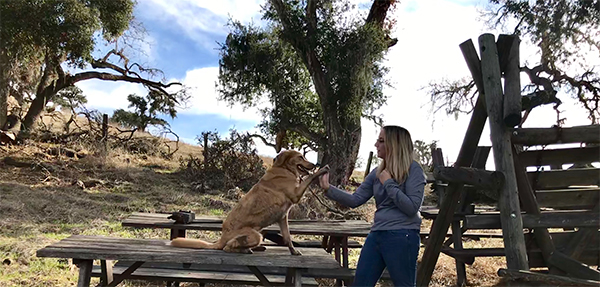
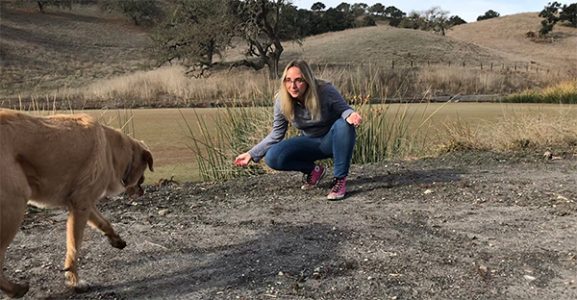
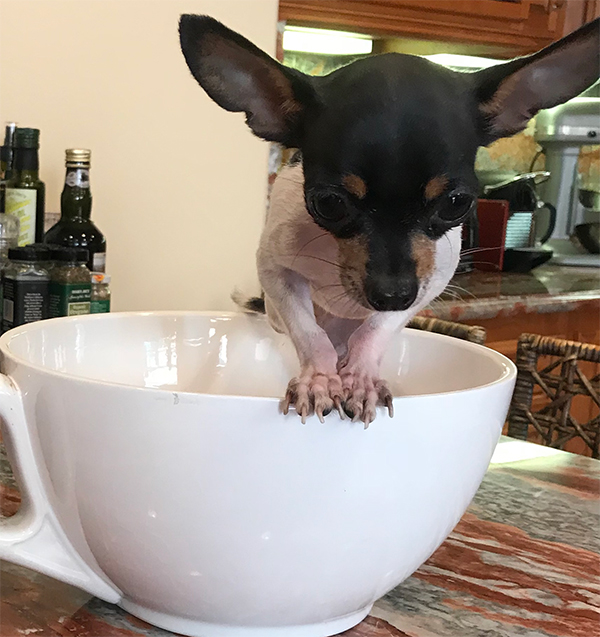
Practicing “paw” command.
Do Your Research
So, what should you be looking for?
Certifications:
CPDT-KA (Certified Professional Dog Trainer – Knowledge Assessed)
CPDT-KSA (Certified Professional Dog Trainer-Knowledge & Skills Assessed)
KPA (Karen Pryor Academy Dog Trainer Professional Program)
Terminology
Positive Reinforcement
Relationship Based
Clicker Training/Reward Marker
Organizations they belong to:
Pet Professional Guild- The Pet Professional Guild is a membership organization representing pet industry professionals who are committed to results based, science based force-free training and pet care
IAABC- International Association of Animal Behavior Consultants
Equipment:
You’ll find that some trainers only use flat or martingale collars and harnesses, while others may incorporate electronic collars or prong collars into their programs. You need to decide which equipment you’re comfortable with and which equipment you’d rather not use. Equipment alone will not bring dog training success. The key is to develop a positive relationship with your dog through training, and the equipment just supplements this relationship, serving as a tool to communicate more clearly with your dog. Without improving the bond you have with your dog, equipment is not so useful.
Detail:
Do they require you fill out an application/behavior questionnaire?
Do they have a liability form/insurance?
Do they offer a written behavior plan after one-on-one lessons?
Will they share contact information of prior clients they’ve worked with so you can get a referral?
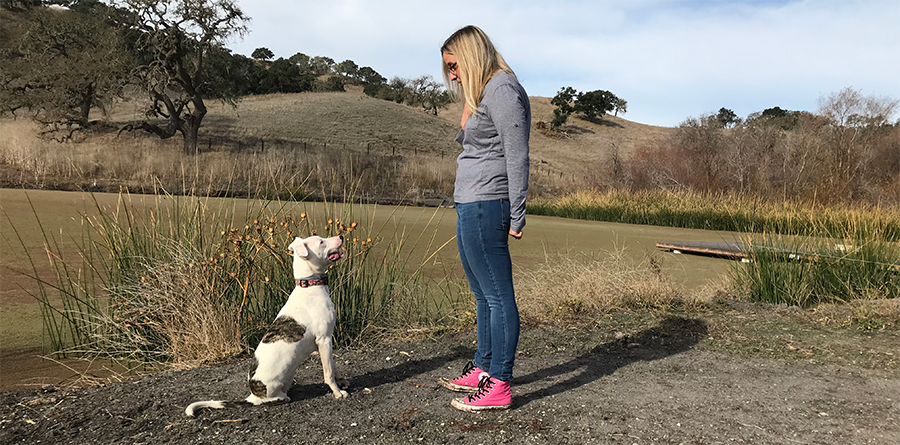
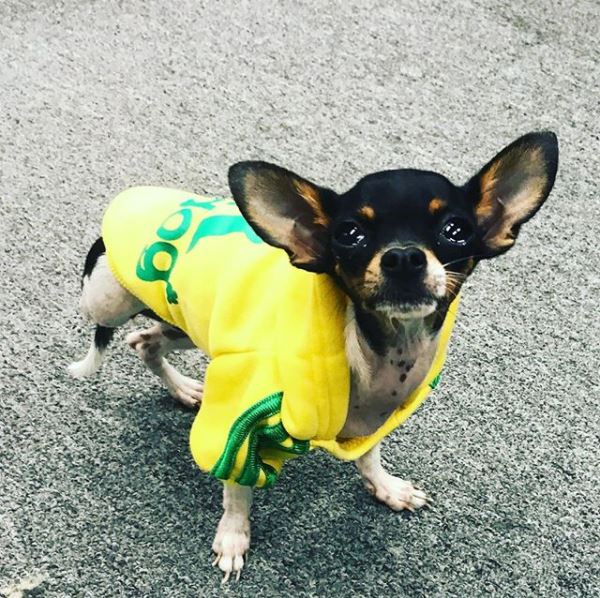
Working on the “come” command.
Tips for Finding Potential Trainers
Many local Shelters and Rescues have excellent, modern, relationship-based training classes.
Your local branch of the SPCA is a good place to start when searching for a trainer.
Ask your veterinarian
Ask your family, friends and neighbors for recommendations
If you are looking for specific behavioral training for a problem behavior, the same rules as above apply, but you may also want to get a referral for a Veterinary Behaviorist. These are veterinarians who specialize in behavior. They can write out a behavior plan for you, prescribe medication if needed and set you up with a local trainer to help you follow through. Many trainers may also be able to help you with behavior problems and modification, but again, make sure they are experienced enough to be doing so, and handle the dogs and the behavior in a way you are comfortable with, and that won’t potentially harm your dog or make the problem worse.
We all love and want to help our dogs, while being able to live with them in a way that fits our lifestyle. Our dogs are always there for us, they love us unconditionally, and we owe it to them to slow down, breathe, educate ourselves and make sure we are doing the best for them we can.
Steph Du Preez is an Adoptions, Behavior, Returns and Local Intake Volunteer at GDRNE as well as, BS, CPDT-KA of Great Dog Rescue NE and Ohh, Sit! Pet Services.
Most cats are beloved furry members of the family but even though they are adored, they can also leave the human members of the family frustrated and confused by behaviors that don’t seem to make sense. What we label as misbehavior or random behavior is just miscommunication between the cat and human. All behaviors make sense to the cat! Let’s decode a few commonly misunderstood behaviors.
Why Does My Cat Like to Hide?
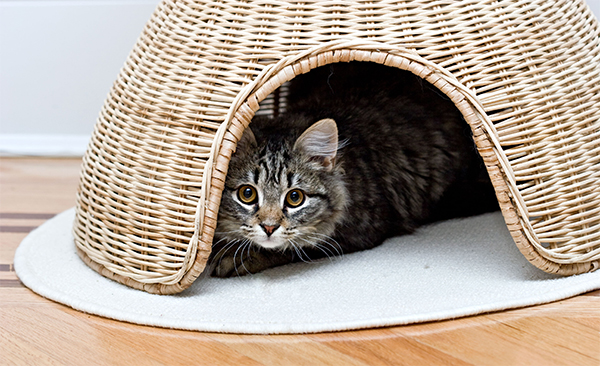
Cats need hiding places.
If your cat likes to hide, it isn’t because he doesn’t like you. If you’ve been trying to get your cat to be more sociable by dragging him out from under the bed, it’s only going to backfire. Being able to have hiding places provides security and allows the cat to feel invisible. If the hiding place gives the cat the opportunity to have his back up against something it also provides extra safety because he’ll feel that no one can sneak up on him from behind. If you set up comfy hiding places such as cave-type beds or boxes turned on their sides, you’ll give your cat a chance to remain hidden while still being in the room with you. As he feels more comfortable and has the choice of whether to engage or not, you may find him spending more time out in the open.
Is My Cat Asking for a Belly Rub When She Rolls onto Her Back?
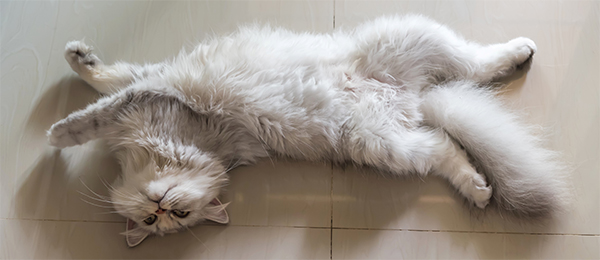
Relaxed cat exposing that hard-to-resist, soft tummy.
You’re probably familiar with the image of a dog rolling over on her back for a good belly rub. What does it mean when your cat exposes her belly and looks as if she wants the same thing? If you’ve obliged in the past, chances are your hand was met with claws and teeth. Is it a trap? What is she telling you by this confusing behavior? In a secure, relaxed environment, a cat may stretch out on her back to sleep or enjoy a sun bath. It’s a sign she feels completely trusting about being in a vulnerable position. Don’t mistake this posture for an invitation to rub her belly because it will likely result in her grabbing your hand. Touching the bellies of most cats triggers this reflex behavior. The reflex is based on the fact that when threatened, a cat may take a defensive posture of rolling over to let an opponent know that she doesn’t want to engage in battle but if pursued, she will engage all weapons – teeth and claws.
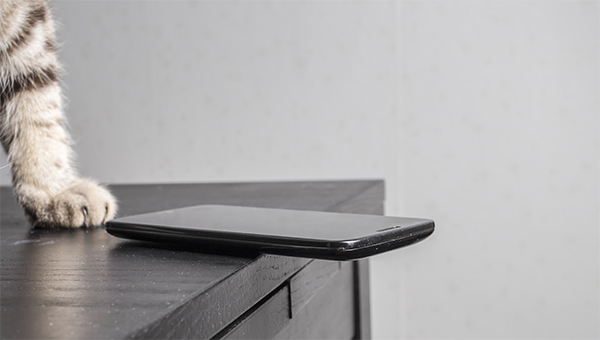
Why Does My Cat Knock Things Off Tables?
Cats often love to explore objects on tables.
Many people may describe this behavior as cats just being jerks or deliberately knocking things over to be annoying. For cats, this behavior makes perfect sense and certainly isn’t motivated by a desire to annoy. Cats use their paws to investigate. It’s safest for a cat to explore an object with his paw before he puts his face close to it. Cats will also touch objects to test for potential movement during play, especially if they’re bored. Certain objects that fall to the ground and roll may spark play behavior. Cats may also knock things off the table as an attention-seeking behavior. This behavior gets repeated when it gets a response from you. The perfect example is if your cat knocks something off your nightstand by the bed in the early morning hours. If you get up and put food in the bowl to quiet him you’ve just taught him that this attention-seeking behavior was a success.
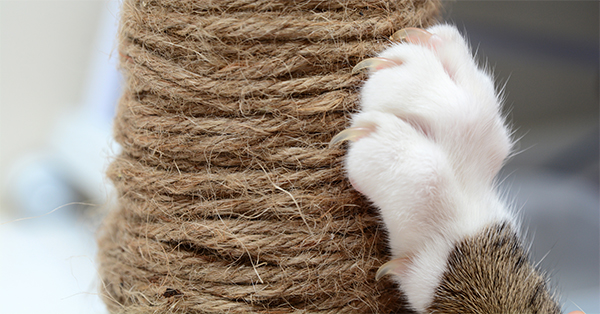
Why Does My Cat Scratch the Furniture?
The ability to scratch is a natural and important part of cat life.
Furniture scratching isn’t done just to sharpen claws and it certainly isn’t done to be destructive. So why does your cat choose the sofa instead of the scratching post? Typically, cats look for objects that are tall, sturdy and covered in a claw-appealing material. Objects also need to be located where the cat likes to scratch. Many scratching posts are too short, covered in a soft material and not very sturdy. To understand what a cat needs, you must understand why they scratch. First, it removes the outer dead nail sheath to expose the new growth. Scratching is also a marking behavior. In addition to leaving a visual mark, it leaves a scent mark from scent glands in the paw pads. Scratching is also how a cat stretches her back and shoulder muscles. Last, but not least, it’s an emotional release. These are all much needed functions in daily cat life. If you’ve tried to convince your cat not to scratch, you’ll only frustrate her. Cats need to scratch. Provide a tall, sturdy post and place it where your cat is currently scratching. Sisal-covered posts are often most appealing to cats. If you give your cat a better option than the sofa, she’ll use it.
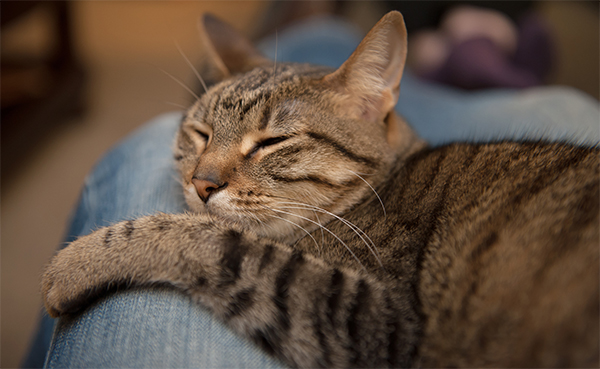
Why Isn’t My Cat Affectionate?
Cats show affection in many different ways.
Actually, cats are affectionate, but we often expect them to show it in the same way as dogs. You may be missing signs of affection from your cat. A common sign of affection is when a cat rubs his cheek against you. If you thought that behavior was just marking, you’re missing the good part. It’s associated with affection, friendliness and familiarity. Another sign of affection is head bunting. This is where your cat touches or butts his forehead up against you. Kneading is another affectionate behavior. It’s a throwback to kittenhood where kittens would milk tread with front paws to stimulate the mother’s release of milk. Many adult cats engage in the behavior on soft surfaces (such as our laps) when feeling content and happy. There are many other affectionate signs from your cat as well, such as an upright tail flick when greeting you, displaying a vulnerable posture, slow eye blinks (also known as cat kisses), touching you with a paw or sitting close by. Your cat may even lick you or “groom” you, known as allogrooming, which is a clear sign of affection as well. This is how the cat mixes his scent with yours. And of course there’s always the magical, mystical purr! Although purring is complex and can be displayed in a variety of situations, chances are, the cat that’s curled up next to you is purring out of love and affection.
What Else Can I Do to Understand my Cat?
Learn to Think Like a Cat
Decoding a cat’s behavior is easier than you realize if you take the time to look at the environment from their point of view. Rest-assured that every behavior, no matter how puzzling it may seem, always makes sense to the cat.
Keep an eye on our blog for future articles and tips on how to better understand your feline friends! You can also sign up for our newsletter to receive insider content and savings!
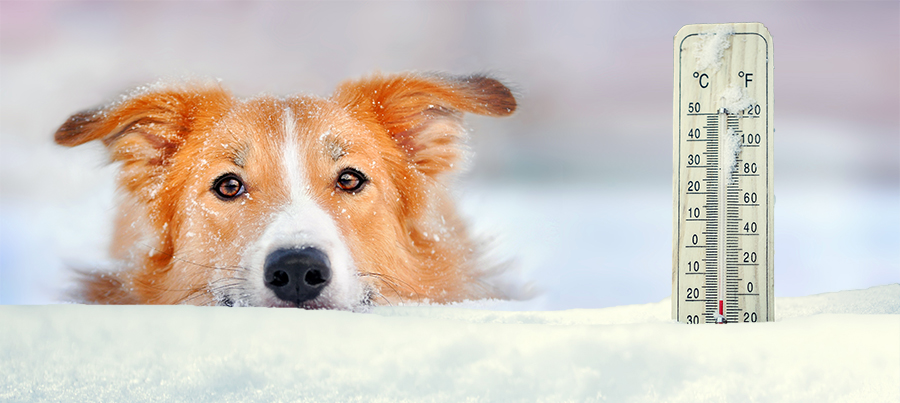
All you need do to do is look at a U.S. weather map or step outside to learn that nearly the entire country is experiencing uncommonly cold, freezing temperatures. It’s icy in Austin, snowy in Nashville and stormy up and down much of the East Coast. As you scramble to add layers of clothing this season, don’t forget about your pets. It’s a common misconception that because they have fur, dogs will stay warm in winter weather, but that’s not the case. As the mercury drops, frostbite in pets is a real risk.
What is Frostbite?
Frostbite is a condition that damages body tissue, is extremely painful and in severe cases can require amputation. It’s also a precursor to hypothermia which can be fatal.
You may be thinking that your dog stays inside most of the time anyway. Yet, pups still need exercise and bathroom breaks. Here’s what you need to know when it comes to protecting your pooch from the cold.
As you can guess, any weather event entitled a “bomb-cyclone” is a good reason to reduce your dog’s outdoor activities. But even weather less severe can put your dog at risk. It turns out that frostbite can take hold of your dog in less than 30 minutes. Of course, certain breeds are at greater risk than others.
Who’s Most at Risk for Frostbite?
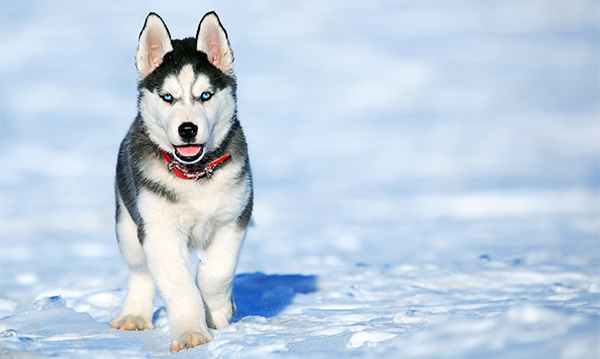
Huskies, Samoyeds, and other winter breeds are bred for cold weather so they can withstand colder temps than many short-haired dogs. These dogs are most susceptibleto frostbite:
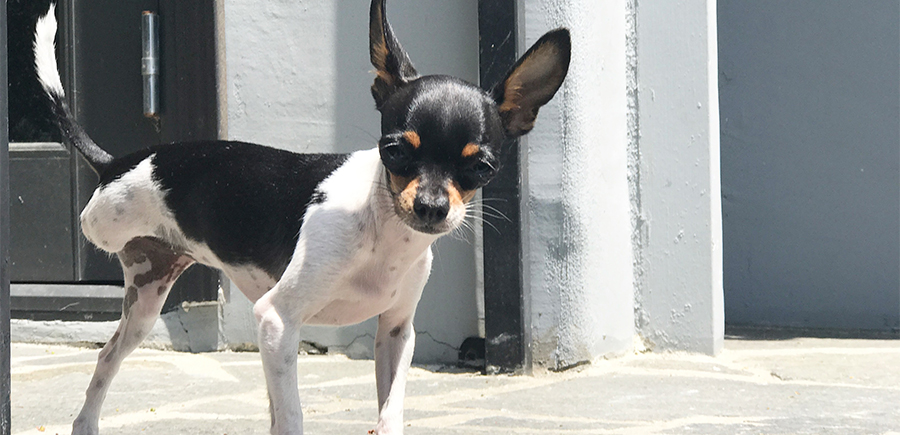
Small dogs
Puppies
Short-haired dogs
Senior dogs
You may wonder how frostbite works. It’s caused by a simple restriction of the blood vessels in the extremities in temperatures below 32 degrees. You may have experienced this yourself in cold fingers or toes. Your dog is likely to feel that type of cold at the tips of the ears, the paws and the tail. Instead of having normal blood flow circulating throughout your dog’s body, the blood flow circulates primarily around the core to keep your dog’s core body temperature warmer leaving the exposed areas vulnerable.
The Symptoms of Frostbite
As you can imagine, frostbite can be painful. Your dog may even wince at a gentle touch or may hesitate to walk on affected areas.
Other symptoms include:
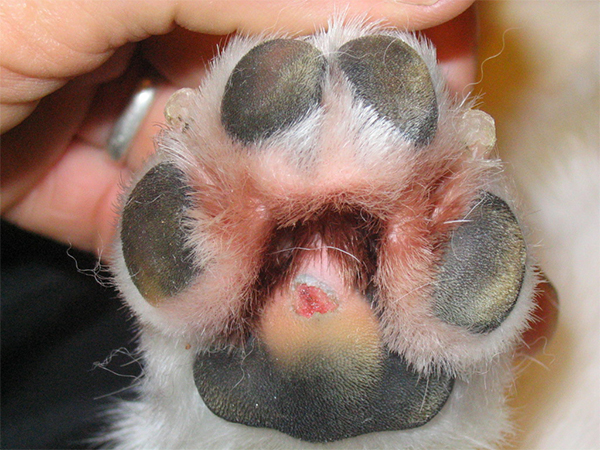
Discolored skin- skin may be unusually pale, or even shades of blue or gray.
Swelling or blisters on your dog’s skin.
Cracked, red, and inflamed skin.
Paw with signs of frostbite. Photo via Animal Clinic of Morris Plains.
If it’s been extremely cold and your dog starts showing these symptoms, do call your veterinarian for recommendations.
Cats Are At Risk, Too
Although we’re focusing on dogs, it’s important to know that frostbite affects cats as well. We don’t recommend letting your cat outside in cold temperatures. If you have community cats that are outside, you can create a well-insulated shelter with dry bedding. Wet bedding is extremely dangerous in cold temperatures. Line the inside of the shelter with straw and pillowcases loosely stuffed with shredded newspaper. Here’s more detail on how to help them through the winter.
Help Your Pet Thrive Through the Winter
So, what’s a dog lover to do? Now that you know frostbite is a danger, even in 30-degree weather, you need alternative ways to entertain your dog. Especially if you have an active dog, you know you can’t simply limit them to 3-4 short outings a day. They need more.
3 Ways to Stay Active with Your Dog During the Depths of Winter
While physical exercise is necessary, so is mental stimulation. If you doubt me, think of what happens when bored children are left alone for too long. They’ll create their own entertainment and it usually creates a big mess for you to clean up. It’s no different with your dog.
Here are three ways you can stay active with your dog no matter how frightful the weather.
1. The Nose Knows
“Nosework” is fun activity for many dogs that allows them to use their enhanced olfactory skills. The idea is that your dog waits and watches while you place treats throughout the room. Under a chair, on the coffee table, you can break up the treats and put them in strategic locations. Then, when you “release” your dog, he runs around and finds the treats.
2. Enhanced Training
This is also great for mental stimulation. For example, if your dog won’t hold still while you “hide” treats around the room, then you can work on that skill. Having your dog sit and hold, then release when you say the word keeps your dog engaged and can prove handy when you have guests over so Max doesn’t jump all over them.
3. Indoor Dog Parks
If you have an active dog, you need to provide opportunities for burning off energy. Otherwise, your furniture may become chew toys. Climate controlled indoor dog parks are popping up all over the country and are a great way to help your dog get the exercise he needs.
Now that you have an idea of the dangers of frostbite and how it can affect your dog, as well as alternatives to spending time outside in the snowy cold, how will you protect your dog this winter?
Last year I walked into a dog rescue organization looking for a doggy soulmate and jogging partner. I wanted to be “that guy” running through the canyons of Los Angeles with a big dog galloping by my side. But, fate is a fickle mistress and decided my future would entail a two pound three legged teacup chihuahua. Oh how the gods must have laughed at me! But the moment I saw her at the shelter, I knew we were connected. From that moment, all thoughts of running the canyons went up in smoke and were replaced with images of being “that guy” that dresses up his little one in the latest doggy fashions. And to this day, it was the best decision I’ve ever made. Sure my doggy clothing budget is a bit higher than expected, but dang she turns eyes while walking down Hollywood Blvd.
“I work fine on three legs!”
What should she eat?
One thing I underestimated was finding a proper diet for my little Frida. See, I grew up as a child of the eighties and during that time period what we feed our dogs was drastically different than the products available today. Back then we just bought the most affordable dog food on the supermarket shelf. What did it matter if it was Brand A or Brand B? It was all the same, we didn’t read the ingredients we just trusted the brand. Well, it’s twenty five years later now and I have my first dog of my own and one of my main concerns revolved around making sure she is on a proper healthy diet. The way I looked at it, I don’t feed myself fast food seven times a week, why would I feed my Frida the dog food equivalent of fast food?
“Please don’t drink the Frida!”
Wait, My Dog is a Wolf?
So, I went where most people go today for knowledge, Google! And I was inundated with confusing and conflicting information. One theme that seemed to be used by multiple brands was that “your dog is wolf, they should eat like wolf.” So I took that info to Frida’s veterinarian and asked her to confirm my research. She laughed at me and asked if I considered myself a neanderthal. She said, “Of course you don’t and you wouldn’t base your diet on what a neanderthal would eat, so why would you base your dog’s diet on what a wolf would eat?” She informed me that my little Frida needs more than just meat, she needs a diet, balanced by including high-quality sources of fat and fiber as well.
No, Frida is #NotAWolf!
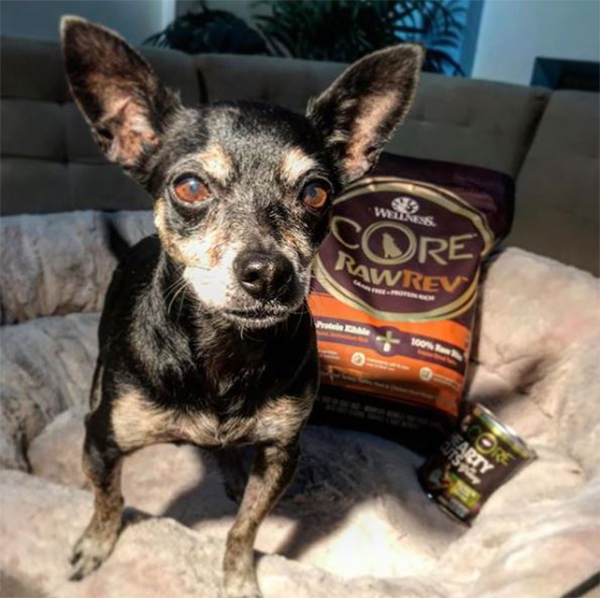
Armed with veterinarian backed information, I continued my search for Frida’s food. And I landed on CORE RawRev by Wellness. First of all and most importantly, Frida loved the taste and devoured her first meal. And for her, that was important first step. She tends to be a very picky eater.
But what really confirmed my choice was the changes I observed in Frida. I immediately witnessed her energy levels perk up─ she was more active and playful. I noticed a massive change in her coat. Not only did she seem to shine more, but I swear she actually grew more hair! And finally and most important for Frida (seeing that she is missing a leg and all), she lost weight and gained lean muscle.
“I hear everything!”
Balanced Diet, Happy Frida!
Frida is my first dog, or you can say she’s my first child. I spend endless hours enjoying her company and companionship. And now, knowing I have found the right diet for her, a healthy diet backed by her veterinarian, I’m confident that I will have a long and healthy journey with Frida. It turns out, she’s #NotAWolf. And a noteworthy side-effect of choosing CORE RawRev by Wellness, is that I’m actually saving money. Which in return, has increased her clothing budget!
The idea of creating a “treat tracker” came about for two very important reasons─ my dogs Zoey and Jack. Aside from feeding my dogs a healthy diet, I’ve always loved giving them treats. For me giving my pups a treat is not only rewarding to them, but it’s rewarding to me as their pet parent. Treating helps me feel more connected and bonded to them.
But, as Zoey and Jack have aged, their bodies have changed. Both of my dogs are now seniors and their activity levels have begun to slow a little along with their metabolisms. Zoey started to put on some weight and Jack became diabetic. Having these changing health concerns caused me to take a step back and look at what I needed to do to ensure both of my dogs stayed healthy. I started to monitor and track how many times each day I was giving a treat, and it was pretty eye opening for me. Doing this helped me adjust the amount of treats I was giving them.
For Jack, insulin is now a part of his daily life, along with a regimented feeding schedule. He can still have treats, but I need to be thoughtful of when and how many he gets to help ensure his blood sugar remains stabilized. For Zoey, I have added more “play time” and exercise into her daily routine and I closely monitor how many treats she is getting each day and week. Since each dog has different health needs, they have their own treat tracker jars which have really helped me get their health back on track. The jars are also a great way for me to ensure other family members are aware of how many treats each dog is getting to ensure they are not getting an excessive amount.
With this new tracking Jack has been doing great and has remained his fun-loving self, and Zoey has maintained a healthy weight and loves all the extra play time!
Check out our step-by-step video, then keep reading for more detailed instructions & ideas on alternate ways to use your custom treat jar!
What You’ll Need / Supplies:
Jar/Canister
Chalk Labels
Chalk Marker or Chalk
Metallic Marker
Your Pet’s Favorite Wellness Treats
Ribbon (Optional)
Instructions:
Step 1:
Choose a Chalk Label size that best fits the size of the Jar you will be using
Step 2:
Determine where you want to place the Chalk Label
Step 3:
Peel and Stick the Chalk Label in the desired location
Step 4:
Use the Metallic Marker to customize your jar with your pet’s name or with paw prints or other desired designs. We labeled our jar with “Treat Tracker”
Step 5:
Use the Chalk Marker or Chalk to write on the chalk label and customize your treat jar. We labeled our jar with the day of the week and are using to track how many treats we are giving our pup each day. This will help track calories, and let other family members know how much we are all treating.
If you’re a pet parent who also loves exploring, then you’ve probably thought about or have traveled with your pet. When you do travel with pets—be it in the car, on a plane or elsewhere, safety should always come first. Jan 2 is National Pet Travel Safety Day; we’re celebrating by sharing some of the top pet safety tips to ensure you and your pets stay safe while traveling.
Airplane Pet Safety Tips
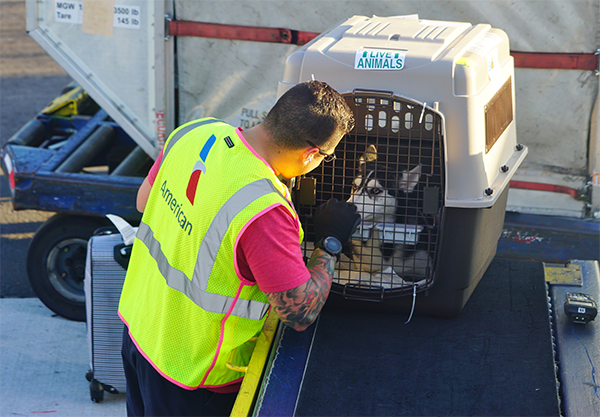
Flying with pets can cause pet owners a lot of anxiety; this is because pets of a certain size have to go into the plane’s cargo area, and no one wants to be separated from their companion on a flight. To ensure safe travel, in addition to reviewing the airline’s regulations for traveling with pets, there are additional things you can do when flying with your pet.
In the week or so before traveling, make a visit with your vet to ensure your pet’s vaccinations are updated and that she’s in great health. Get a certification. The recommendation from the ASPCA is 10 days for the wellness certificate.
Use a well-ventilated USDA-approved shipping crate large enough for your pet to stand, sit, and turn around. Line the crate with bedding for comfort. Depending on the length of the flight, if your pet might get hungry, attach a dry food supply to the outside of the crate, so those attending to your pet can feed her during layovers.
Label your pet’s crate with her name, photo, your name, your address, and your phone number, as well as the words “Live Animal”. Make sure you have a photo of your pet accessible in your bag or on your phone, so you can ID your pet if she escapes her crate.
Notify employees that you have a pet in the cargo hold area, so if there is a layover someone can check on him.
Pet Safety Tips for Car Trips
One advantage of road trips with your pets is that your four-legged BFF is right there with you the whole time. A disadvantage is that you need to be able to focus on driving and your cat or dog can become a distraction depending on the circumstances. Safe car trip pet tips include:
Get your pet acclimated to car travel prior to a big trip by taking short drives around town.
Bring necessities for your pet’s well-being in the car with you: food, bottled water, toys, a scoop for potty breaks, medication, identifying papers, collar and ID tag (or microchip), leash and harness, etc.
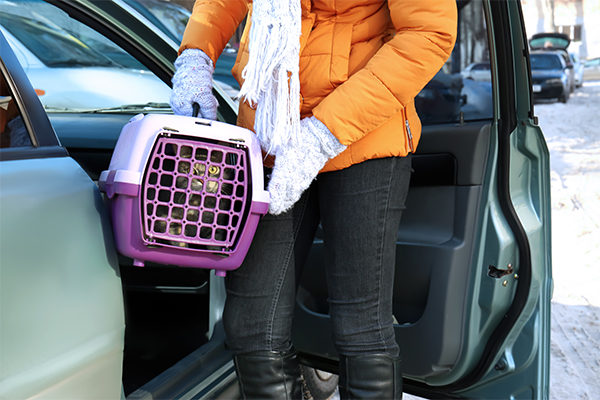
When you stop, don’t leave your pet in the car. Take the carrier with you wherever you go or take your pet in on a lead.
Keep pets out of the front seat as they can get on the floor and under your brake pedal.
Put your pet in the carrier or on a leash before opening the door. Anxious pets are likely to bolt when you get out somewhere.
Don’t let your dog hang his head out the window; eye injuries can occur this way.
Train, Bus, & Boat Pet Safety
While airlines have policies for traveling with pets, Amtrak trains and Greyhound buses do not (except for service dogs). Some cruises are a little more flexible, so before you buy your ticket for this kind of travel, check the guidelines. Otherwise, the same safe practices for car and air travel apply here.
Take the anxiety out of traveling with pets and make it fun by following safety best-practices. When you’re safe and traveling with pets is allowed, there’s no reason to leave your four-legged family members at home.
Surround your pets with familiar things while traveling. Don’t forget your pet’s favorite toy, pillow or blanket and food.
Photo via @shehasmoxie
Familiar things reduce anxiety. Wellness Pet Food is dedicated to making sure your pet’s emotional, mental, physical, and nutritional needs are met, which is why all of our pet foods are made using natural, quality ingredients.
It’s Senior Pet Month, so we wanted to take this opportunity to bring you profiles on some of the Wellness Pet Food team’s wisest, most mature pets from the perspective of their loving pet parents. From a loyal 17-year old Border Collie, Lhasa Apso mix to a former street kitty who’s now enjoying a life of leisure, we’ve tried to capture the unique experience of owning a senior pet. Keep reading to meet Abby, Isabelle, Bob and Sox.
Senior Pet: Abby, Mutt, Lab Mix Pet Parent: Elaine O., Wellness Brand Team
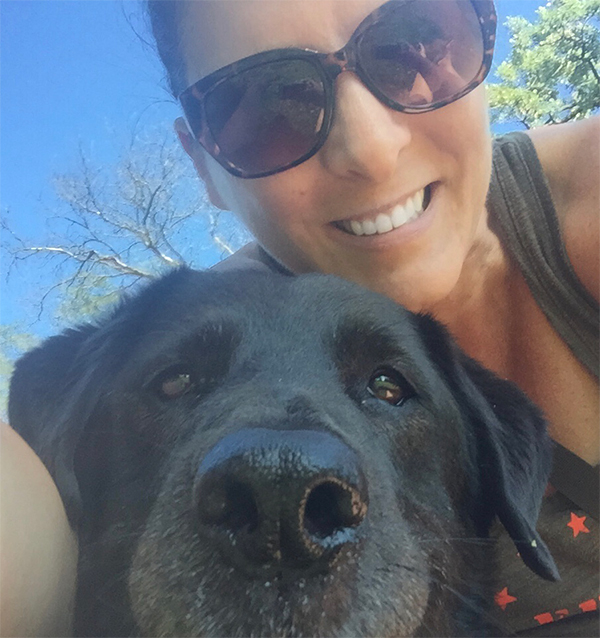
Elaine capturing a selfie with senior pup, Abby.
Q. How long have you had your senior pet?
I found Abby as a stray about six years ago. I was vacationing in Yosemite, and she had been the town stray for two years. She lived outside and the restaurants were feeding her. She showed up my first morning as I was eating breakfast on the hotel patio. She just sat quietly next to me with her hopeful eyes saying, “You probably don’t want that bacon, right?” It took about 30 seconds for me to fall in love. Best guesses from my vet, once I brought her home, was that she was around 6 or 7 years old. We found that she had fairly significant arthritis, already, and a repaired right ACL. Someone had obviously loved her, but she had no microchip. Of course, she does now! I brought her home to live with me and my then senior dog Max – he was 12 years old at that time. I’ve had a fair amount of experience with senior pets. Max was with me until he was 16, and my dog before him was with me until she was 14. Abby is now 12 to 13 years old.
Q. What’s the best thing about having a senior pet?
If you’ve had your pet for some time, the bond between you, when they move into their senior years, is that much stronger. They’ve seen you through so much in your life. At least, that’s how it’s been for me. When Abby looks at me, I know she knows…And Senior dogs like to spend more time ‘lovin’. Abby loves everyone. She’s still curious and engaged, but she also is much more content. And, at least with Abby, her body stiffness gives her a unique way of moving that is very endearing. She still gets excited about walks and mealtime (especially about mealtime), but instead of jumping around, she kind of does this stiff-legged dance. It’s adorable!
Q. What steps do you take to keep your senior pet in tip-top shape?
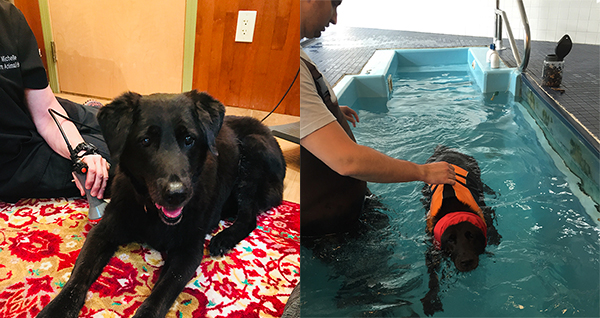
Because Abby has such significant arthritis, I do a lot to help her out. She goes for regular cold laser treatments to help with the swelling in her joints and water therapy (she swims) to keep her muscle tone and strength. Since she’s not a runner, anymore, the water therapy and exercise becomes very important to maintaining her health. I also learned how to give doggy massages which she gets just about every night. I give her Fish Oil supplements and a variety of supplements for her arthritis. I even make ‘golden paste’ for her, which is Turmeric – it’s a great natural remedy for arthritis.
Here’s Abby getting her cold laser therapy treatment (left) and paddling in the therapy pool
Q. What’s your pet’s favorite Wellness food or treat?
Abby loves all Wellness treats, but she has a special interest in WellBites. Yesterday, she managed to break into the treat cupboard. I have a healthy variety of treats to choose from in the cupboard, but she went for the WellBites!
For mealtime, Abby gets a special, customized blend of food, starting with one of our great dry kibble products as a base. I like CORE RawRev Wild Game, but I also use CORE Ocean. I mix in the CORE Tender Bites as a topper – this product is amazing! Then I add some fresh veggies like carrots, peas and spinach to make it a bit more interesting for her. She loves mealtime! It’s her favorite part of the day! And I love to see her dance around while I get her meal ready – so it’s my favorite part of the day, too.
At 17, Isabelle is our most senior lady here at Wellness.
Q. How long have you had your senior pet?
I was on an email list for a local rescue group, and they let me know that a family in Poland Spring, Maine had puppies available for adoption. The puppies were a mix of Border Collie and Lhasa Apso (that’s what they told us, at least!). We drove more than four hours from Southern New Hampshire to pick her up. She was only 6 weeks old and was such a little peanut. (Back then, I was not as knowledgeable about adopting a puppy, and didn’t know that she shouldn’t have been adopted before she was two months old.) Isabelle was a handful when she was puppy. I enrolled her in puppy training classes, but we never graduated…she was not a model student! She complies half the time, but her sweet personality always makes up for any naughty behavior.
Q. What’s the best thing about having a senior pet?
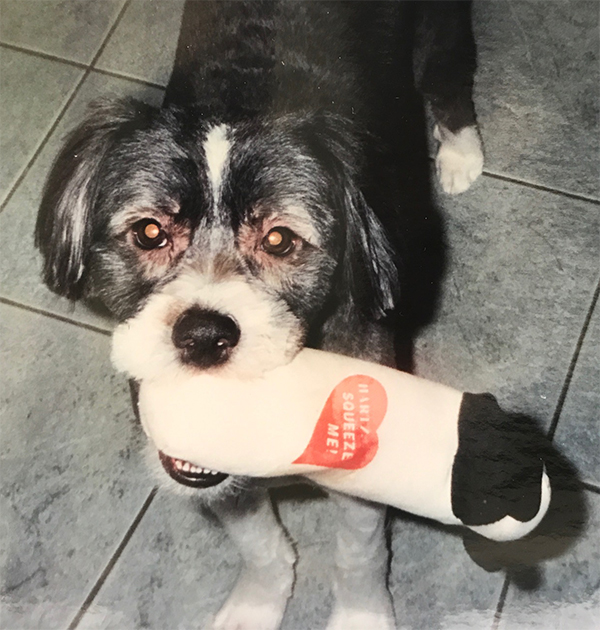
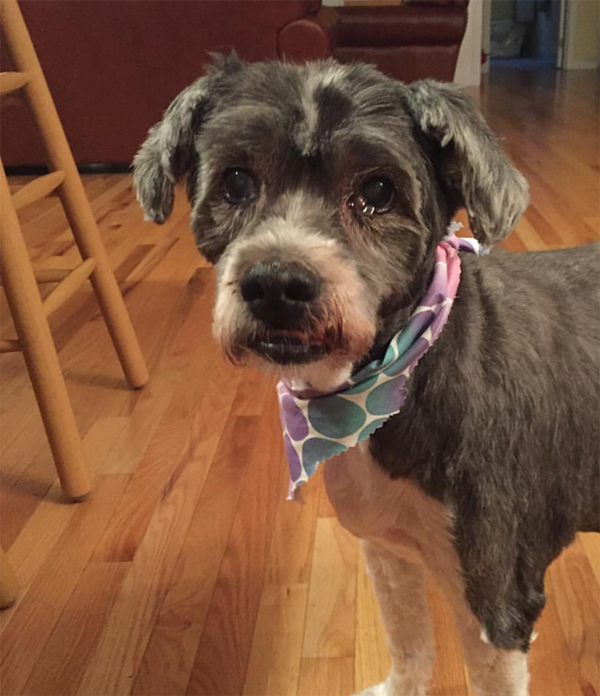
Isabelle at 17-years-old.
As she’s continued to grow older, she has kept her puppy-like joy and happy-no-matter-what attitude, even though she’s lost some mobility in her legs, and her sight isn’t as sharp as it used to be. Although her body has slowed down, Isabelle’s personality has become even softer. Her tail still wags when I come home, or when she gets to go outside and play in the grass. Plus, I’m still her favorite; she follows me around the house–when I leave a room she moves with me, and she sleeps by my side every night. I know that each day I have her I’m incredibly lucky she’s been a member of our family for so long.
Q. What steps do you take to keep your senior pet in tip-top shape?
As a member of my family, I’ve always wanted Isabelle to have the best life she can. Caring for a senior pet can be hard work, not to mention the emotions you experience seeing them not be able to jump as high as they once could, or not hear you when you call their name. As the oldest of our three pets (we have a Sheltie named Stanley, and a Tortoiseshell cat named Brownee), Isabelle is the most spoiled. She has a plush orthopedic bed, which increases circulation and reduces stiffness — perfect for dogs with arthritis. We’ve elevated her food and water bowls so it’s easier for her to eat and drink. And as a perk of being a member of the WellPet family, she enjoys Old Mother Hubbard Hip and Joint All-Natural Dog Snacks and daily meals of Wellness Homestyle Stews like Turkey & Duck with Sweet Potatoes & Cranberries – perfect for the Fall and Holiday season.
Q. What’s your pet’s favorite Wellness food or treat?
Isabelle has been enjoying Wellness Complete Health Whitefish & Sweet Potatoes since I joined WellPet as a marketing team member back in 2006! She now loves our new Wellness Complete Health Grain Free recipes. Everyone always asks, “what’s the secret to having a dog that’s 17 years old?”. She continues to live such a healthy life because she’s been a Wellness dog for so long. She’s a true testament to the power of natural nutrition for our furry family members.
Senior Pet: Bob, Domestic Longhair, Maine-Coon Mix Pet Parent: Carly W., Marketing
Q. How long have you had your senior pet?
We’ve been grateful to have had Bob for the last 6 ½ years. When we adopted Bob, the shelter told us he was known by locals to have lived in a trailer park as a stray for two years before he was rescued (even through the harsh New England winters). When we took him to the vet in 2011, they estimated his age at 8-10 years old, so we think he’s about 15 or 16 years old today.
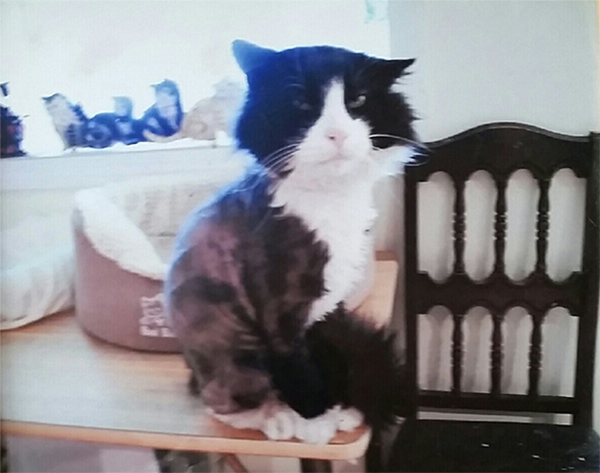
When he was first rescued, Bob got a terrible haircut to remove his mats. As you can see, he was not at all happy about this.
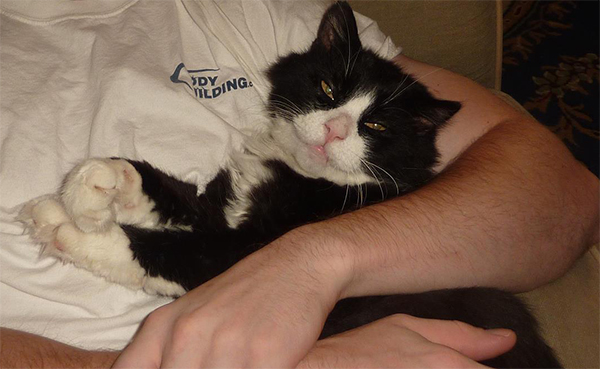
Photo from the first day Bob was brought home. He immediately made himself comfortable!
When we first took Bob home, we found he had many health problems—fleas, infections, bad teeth, asthma and a heart condition! But he’s always had the most loving, endearing temperament, so working through his health problems seemed like no big deal. Along with a lot of healing snuggles and purrs, we credit his health improvements to his food. From the time we started feeding Wellness, we noticed his allergic dermatitis heal and his coat turn silky smooth.
Q. What’s the best thing about having a senior pet?
Senior pets are the best! When we adopted Bob, we knew exactly what to expect from his personality. Bob has a lot of wisdom from his experience on the streets–you can tell from his eyes. He’s not easily rattled, and always makes it clear if he needs food or pets. He still loves to play a little each day, but is usually content to snuggle with us on the couch or sleep in one of his favorite spots (he rotates between a few).
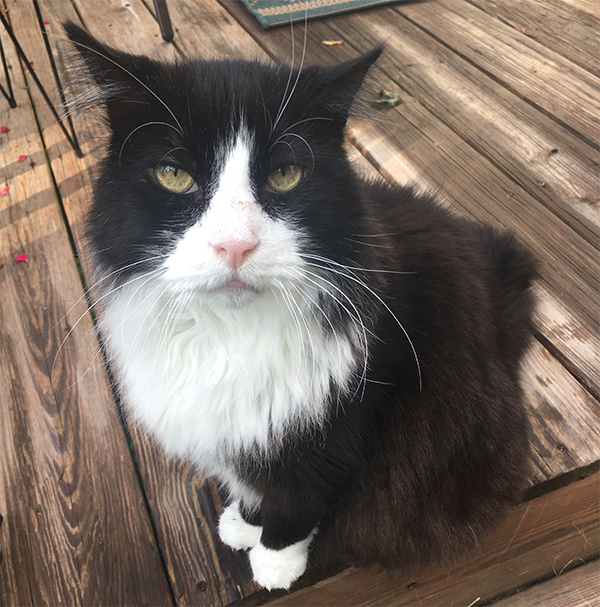
Bob showing off his salt-and-pepper muzzle.
Q. What steps do you take to keep your senior pet in tip-top shape?
Bob is a longhaired cat so we brush him regularly to cut down on hairballs and make it easier for him to groom himself. We play with him and take him outside in a supervised, fenced-in area so he can enjoy the outdoors when the weather is nice. We give him a pill each day for his heart, and take him to the vet regularly. We also feed him Wellness wet food exclusively which keeps him hydrated and is easier on his teeth. We monitor his weight and if he seems to be losing or gaining weight, we adjust his diet accordingly.
Q. What’s your pet’s favorite Wellness food or treat?
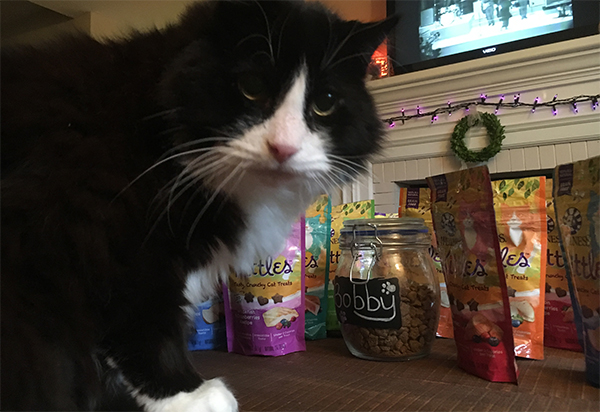
Bob getting spoiled on National Cat Day with an array of Wellness Kittles.
Senior Pet: Sox, Lab Mix Pet Parent: Beth C., Sales
Q. How long have you had your senior pet?
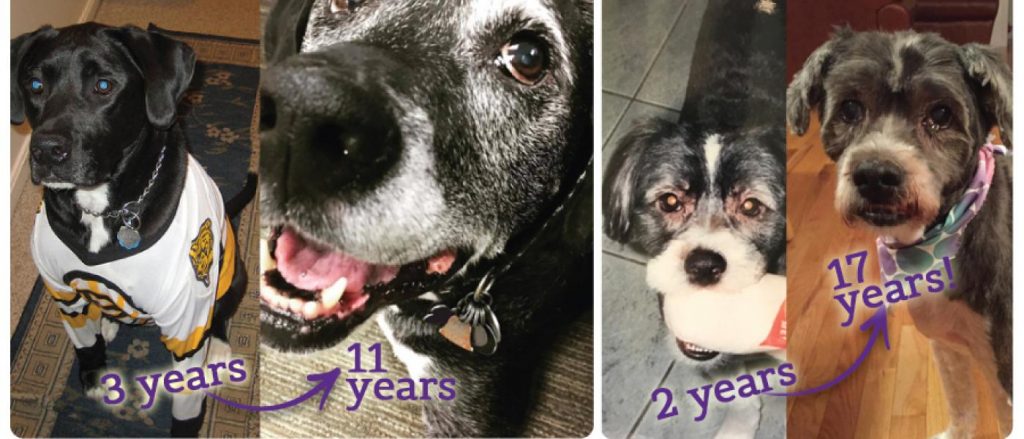
Sox has been a member of the Carchia family since he was a teeny pup, 11.5 years! Sox came to live with me and my husband when my Father in Law became too ill to care for him, so Sox has been living with us for about 2.5 years.
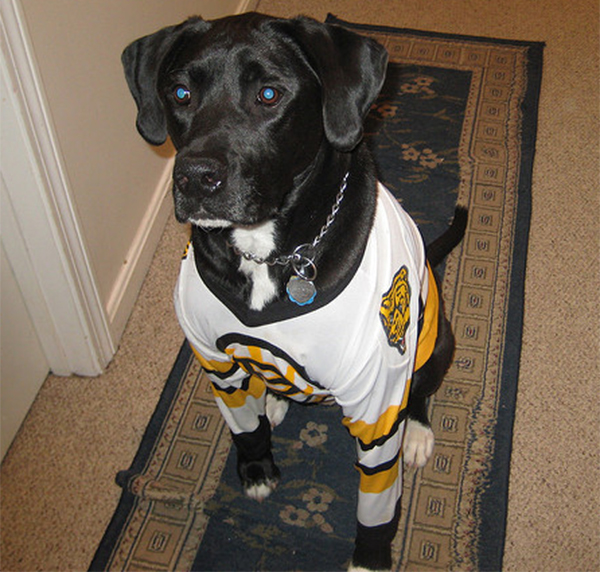
Here’s Sox as a youngster, repping his Bruins jersey!
Q. What’s the best thing about having a senior pet?
The best thing about a senior pet is the love they share with you. They know you and your routine better than you do sometimes and we can set our watch by him. Sox knows exactly when we are planning to take him for a walk, when it’s dinner time, when he’s supposed to get his treats (he certainly reminds us when we are late!) and when it’s time to cuddle on the couch. Senior dogs come at a different pace. Sox has arthritis in his hips so he’s not as fast as he used to be, but that makes him more content to just be with us on a slow walk or a car ride instead of constantly being on the run. Since we have a baby this makes our life a little easier to manage!
Q. What steps do you take to keep your senior pet in tip-top shape?
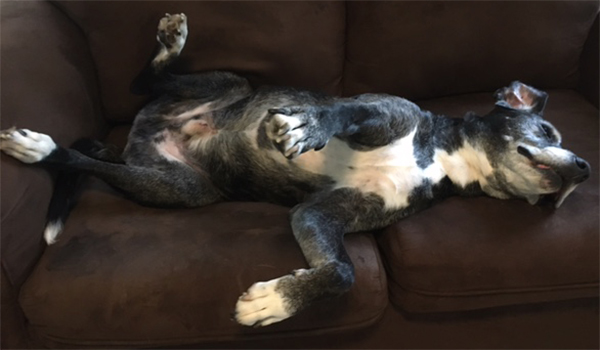
Sox is still young at heart!
Sox eats Holistic Select for his diet and gets at least a 30 min walk every single day. His food helps him maintain a healthy weight, good digestion and has extra nutrients to help with his bones and joints. Walks are very important for older dogs with arthritis, the better shape they are in and consistent exercise keeps his joints from stiffening up. He also receives a hip/joint supplement every day, as well as a pain medication 2x/day for his arthritis. We take him to doggie daycare once a week to keep him socialized and get him extra exercise. He is one of 3 senior pups there and is a staff favorite! Daycare keeps him young at heart and likes to try and play with all of the younger pups!
Q. What’s your pet’s favorite Wellness food or treat?
We’d love to see photos and read stories about your senior pets! Post on Facebook, Twitter or Instagram using: #wellnesspetfood and #seniorwellnesspet. We’ll feature some of our favorites on our website!
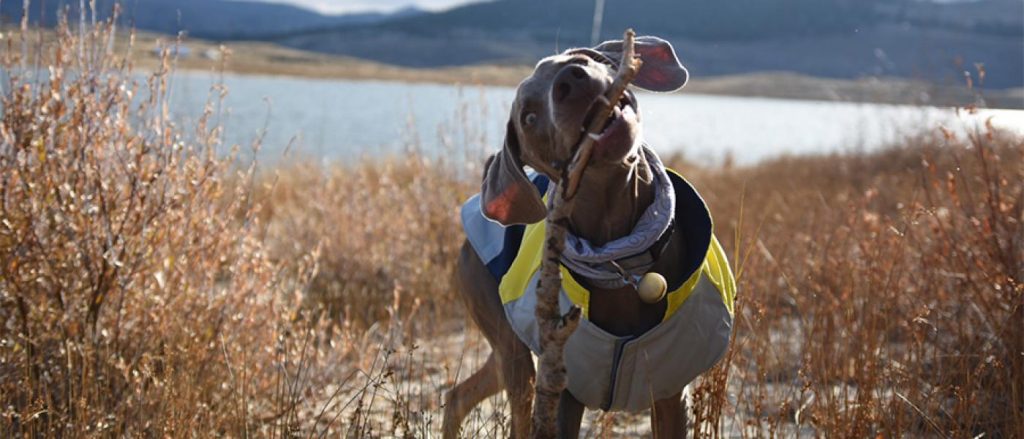
I have always been a dog lover. And when the time came for me to get my own dog, I knew exactly what I wanted. A dog that shared my same passions. A dog that would go on countless adventures with me and be my loyal companion and best friend. Koda, a weimaraner, enjoys swimming, hiking, smelling and most of all sticks. He’s always by my side. He’s deathly afraid of losing track of me and hates it even worse when I’m gone. He’ll nervously chew his tail when I’m gone. One week ago, Koda set out on his first big adventure – a road trip from Colorado to Washington State.
Packing and Prepping
As my girlfriend (aka Koda’s girl) and I packed up our apartment and loaded up the truck Koda began to stress. Nervously barking and racing around the house, he was beyond worried that he would get left behind. He goes absolutely everywhere with us, yet always acts as if he’s actually going to be abandoned or left behind. When we finally finished packing and grabbed his leash, excitement came over Koda. He knew that we were going exploring and he was pretty sure that he was going to come along.
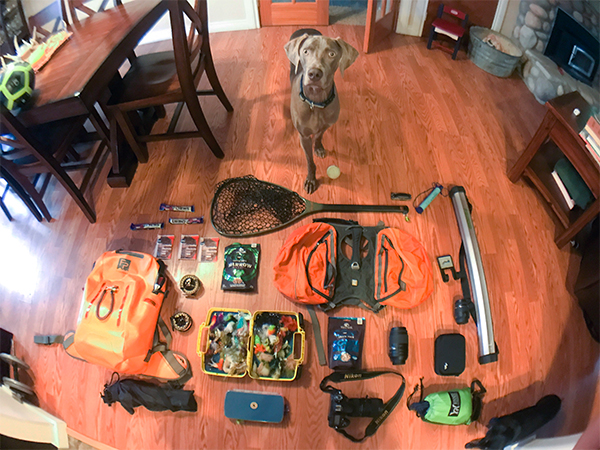
Here’s our “camping with a dog carry” which includes Koda’s backpack, fishing gear,CORE 100%and my Nikon, of course.
Hittin’ the Road
Within 30 minutes of driving, Koda gave up his anxious pacing across the backseat, and was sound asleep. Occasionally he would wake up and smell around for the Wellness treats he knew were in the car, find one to eat (or ten), and then fall right back to sleep.
Pinedale, Wyoming
Our first stop was Pinedale, Wyoming. Located at the base of the Wind River Mountain Range, Pinedale was the perfect place to stop and adventure. After a good night’s rest and a big breakfast, it was time to explore! We spent the day fishing, hiking, and chasing sticks. Koda ran miles and miles and chewed up at least fifty sticks. That afternoon, we set out for the next destination, Jackson Hole and Koda’s first trip to a National Park.
Taking a break from snowball chasing in Yellowstone to refuel with Wellness treats!
Waking up to snow in Jackson, we ventured into the Grand Teton National Park. Koda knew he was going to get to do lots of adventuring here and he couldn’t wait to eat frozen sticks and chase snowballs that, much to his surprise, he would never find. Stopping several times throughout the park to get out and explore, Koda was having the time of his life.
Yellowstone
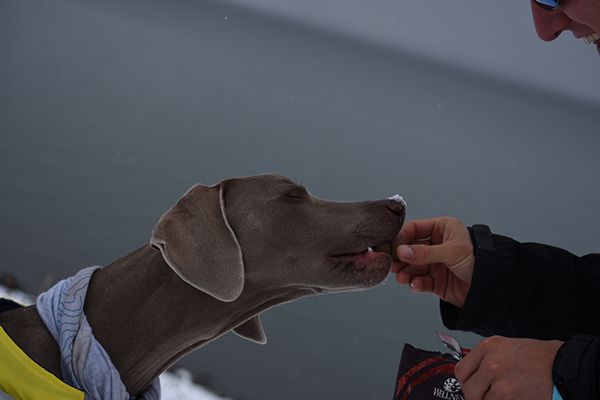
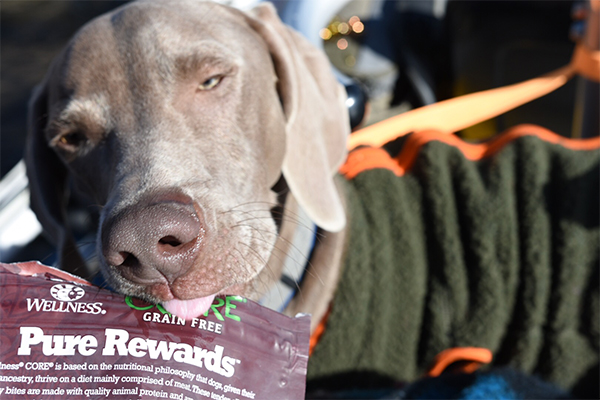
Koda’s favorite snack! He might love hisCORE Pure Rewardsmore than sticks.
After we passed through The Grand Tetons, Yellowstone was next on our list. There would be no naps for Koda today as we drove past herds of buffalo and elk. Koda wanted nothing more than to get out and play with the buffalo as they walked within inches of our truck! I imagine he thought they were just another large dog he might play with at a dog park.
Bozeman, Montana
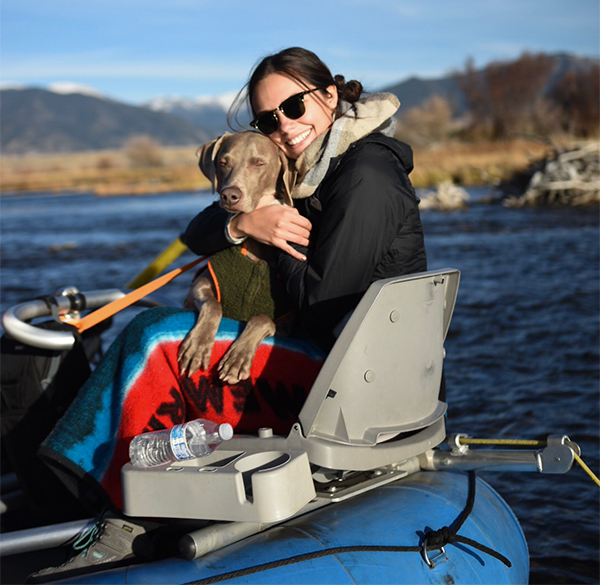
Koda soaking up the sun on the Madison River with his girl, Kylie.
With two National Parks behind us, Bozeman, Montana, was our next stop on the list. Although we spent countless hours fishing together, Koda had never been on a boat. We did have him on a paddle board one time, which went shockingly well. During our stay in Bozeman, Koda floated the Madison River – a river known around the world for its beautiful sights and hungry trout! Koda was amazing on the boat, He never tried to jump overboard after ducks or fish. He just sat back and enjoyed the ride. And also ate an entire bag of his Wellness treats while we were busy fishing.
No Place Like Home
After a weekend filled with adventures and meeting new friends in Bozeman, it was time to start the final leg of out journey. Only twelve hours until we were finally home. Although Koda has spent the majority of his first year in Colorado, he is a Washingtonian. Koda is powered daily by Wellness and is already itching for his next big adventure. Time for his first trip to the ocean!
Autumn is here and the feeling of fall is in the air. Pumpkin spice is on every menu, the air is cool, the leaves are extraordinary colors, and Thanksgiving planning has begun! I don’t know about you, but Thanksgiving is one of my all-time favorite holidays. And as much as we all love the amazing Thanksgiving food and festivities, so do our pets. My dog Dory sits patiently in the kitchen all day while I prepare Thanksgiving dinner for our family waiting for me to drop a piece of turkey or offer some mashed potatoes. Unfortunately, as a small animal veterinarian, this is a common time of year when I see many emergencies from pets eating “human” food that can cause illness. So today, I would like to take a moment to discuss the typical autumn and Thanksgiving foods that are toxic for our pets, what clinical signs that you may see, and what you need to do if your pet eats these foods.
Onions, Garlic, Chives
I know…who knew? These food items are commonly used in preparing Thanksgiving dinner. Cats are actually more susceptible to the toxic effects of onions, garlic, and chives; however, dogs are also at risk. The toxicity causes a condition called hemolytic anemia, which is characterized by the bursting of red blood cells circulating through your pet’s body. Ingestion can also cause less critical side effects such as gastrointestinal irritation. Toxicity is normally diagnosed through history, clinical signs and microscopic evaluation of red blood cells.
Grapes and Raisins
Some fruits are more common for consumption during autumn months. Although the toxic substance within grapes and raisins is unknown, these fruits can cause kidney failure in dogs. It is best to avoid feeding grapes and raisins to dogs altogether.
Macadamia Nuts
Although not as common, many people bake cookies and desserts with macadamia nuts. Weakness, depression, vomiting, tremors and hyperthermia are common clinical signs associated with macadamia nut ingestion in dogs. Signs usually appear within 12 hours of ingestion and can last approximately 12 to 48 hours.
Nuts
Nuts, including almonds, pecans, and walnuts, contain high amounts of oils and fats. Foods that are high in oils and fats can cause vomiting, diarrhea, and potentially pancreatitis in pets.
Milk and Dairy
Milk and cream are common ingredients in Thanksgiving foods. Please be cautious with dairy. Despite what many people believe, pets do not digest dairy products well. Dogs and cats do not have significant amounts of lactase, the enzyme that breaks down lactose in milk. Milk and other dairy-based products cause your pet to suffer from diarrhea or other stomach upset.
Salt and Salty Snack Foods
Pretzels and potato chips are in abundance during the football season. Large amounts of salt can produce excessive thirst and urination, or even sodium-ion poisoning in pets. Salt toxicity clinical signs include vomiting, diarrhea, depression, tremors, elevated body temperature, seizures and even death. Please avoid giving your pets foods that are high in salts such as potato chips or pretzels.
Alcohol
I know, I know, this seems obvious, right? Well you would be surprised how many times I have seen alcohol intoxication on emergency. Most cases are accidents. Clinical signs include vomiting, diarrhea, decreased coordination, central nervous system depression, difficulty breathing, tremors, abnormal blood acidity, coma and even death. If your pet has ingested alcohol, see or contact your veterinarian immediately.
Chocolate, Coffee and Caffeine
Chocolate, ice-cream, and desserts are a big part of the Thanksgiving meal, especially if you have children. Chocolate contains two ingredients that are toxic in large quantities: theobromine and caffeine. Different types of chocolate contain different amounts of theobromine and caffeine; therefore, the amount and the type of chocolate your pet eats plays a role in its toxic effects. Darker chocolate is more dangerous than milk chocolate. White chocolate has the lowest level of theobromine, while baking chocolate contains the highest. Clinical signs of chocolate toxicity include diarrhea or vomiting from the high-fat content in the chocolate, restlessness, hyperactivity, muscle twitching, tremors, increased drinking and urination, excessive panting, irritability, increased heart rate and abnormal heart rhythm.
Raw or Undercooked Meat, Eggs and Bones
Raw meat and raw eggs can contain bacteria such as salmonella and E. coli that can be harmful to pets and humans. Pets can choke on bones, or sustain injury should the bone splinter become lodged in or puncture their digestive tract.
Yeast Dough
I have seen this emergency a few times. When pets digest raw yeast dough, the dough can expand and rise in the GI tract, causing gas to accumulate. This can be painful and cause the stomach to bloat, and potentially twist, becoming a life-threatening emergency. In addition, the yeast produces ethanol as a bi-product and a dog ingesting raw dough may become drunk (see the section on alcohol above).
I hope this helps all my pet parents out there be more aware of all the possible common autumn foods that can be dangerous for your pets. There is no need for your pets to feel left out. Let them indulge on Thanksgiving! I tell all my pet parents to have your Thanksgiving treats and food easily accessible during the holiday festivities and spoil your pets rotten. I absolutely love and trust Wellness CORE and it is what feed my own dog. Wellness CORE is a balanced diet that is grain free, contains all the highest quality ingredients, added supplements (omega 3 fatty acids, and glucosamine), and higher protein for lean body mass and muscle tone. My goal is to always keep our pets safe and healthy. As much as I love seeing them walk through my animal hospital doors, I prefer to help avoid sick trips to the veterinarian, especially during Thanksgiving when you should be spending time being grateful with your closest friends, family, and of course your pets.
Hello everyone! My name is Alison Streit and I am Forever Freckled’s veterinarian. Being a veterinarian has been my dream job since I could barely speak. Over the past six years, I have dedicated my life to building, opening, and running an animal hospital in Fort Lauderdale, Florida, accomplishing a life long goal of mine. It has been an amazing journey turning my passion for animals into a career. I know pets are our family and nothing brings me more joy than to help pets and their parents with wellness and healthy living. In addition to being a veterinarian, I am a wife to my amazing husband Rob, and a mommy to my greatest accomplishments and the most unbelievable joy for me, my children Luke, Leah and Hayden. Everyday I feel so lucky to have pursued my dreams to take care of animals, and become a wife and mother. I am so proud to have started Forever Freckled with my sisters and develop a platform to help people and pets on their life journeys.
The technical storage or access is strictly necessary for the legitimate purpose of enabling the use of a specific service explicitly requested by the subscriber or user, or for the sole purpose of carrying out the transmission of a communication over an electronic communications network.
Preferences
The technical storage or access is necessary for the legitimate purpose of storing preferences that are not requested by the subscriber or user.
Statistics
The technical storage or access that is used exclusively for statistical purposes.The technical storage or access that is used exclusively for anonymous statistical purposes. Without a subpoena, voluntary compliance on the part of your Internet Service Provider, or additional records from a third party, information stored or retrieved for this purpose alone cannot usually be used to identify you.
Marketing
The technical storage or access is required to create user profiles to send advertising, or to track the user on a website or across several websites for similar marketing purposes.